It’s done! RMST 321 / MDVL 301 Canvas course site translated into UBC Blogs site, for future archiving purposes. Including assignments in full detail down/up to marking rubrics, class notes pages, where to access readings … sure, it’s a course that ended last April, but it’s a very real sense of satisfaction and completion, of a clear head, just in time for making new course sites on Canvas next week.
MDVL 301 / RMST 321 (cross-listed):
European Literature from the 5th to the 14th Century /
French Literature from the Middle Ages to the Revolution:
“A World of Marvels”
(January-April 2025)
As ever, you only have a sense of thing after it’s finished and you’re rereading it, as a whole and with its whole network of work-in-progress notes, all the way back to its beginnings as far back as you can go into them. You’ve seen the behind-the-scenes work in progress for 2021’s RMST 201. It was also an experiment in teaching writing by women (inclusively, and so including a trans text) without calling it anything other than “literature”; reversing the usual Great Books Of Western Civilisation erasure, marginality, exceptionalism, tokenism, and invisibility. Because positioning can be so cringe and falls too easily into posturing, thence down a slippery slope into non-performativity and back into erasure: I didn’t talk about it, I just took an intersectional-inclusive-ecofeminist position as read—I’m a woman, therefore standpoint feminist—while always having space and time every week in case anyone wanted to discuss that position, as the weekly discussion session was designed to be flexible and capacious. L’existentialisme est un humanisme est un féminisme: rereading its Canvas class notes (not yet posted on the UBC Blogs version), the course is about poetry and poiesis; see for example this piece about Tanya Tagaq, and our only set secondary reading, Audre Lorde, “Poetry is not a luxury” (1977).
RMST 321 / MDVL 301 was faster and easier to design, as I had more time and I’d mostly thought it through several months before; it started out as a version of MDVL 310D: Topics in Medieval Studies: “Marvels” (2017); with what for me is now the usual organisation for such 200- or 300-level literary & culture &-area-c. studies courses:
- introduction
- and to some extent co-designing the syllabus and course
- the outer frame
- 3-5 parts /modules
- main body
- regular weekly rhythm: 2 class sessions / week, each 80 minutes
– the first is my lecture / reading ( / storytelling …)
– the second is a discussion / reading together and writing commentary in a Canvas Discussion Post, with flexibility as to how (individually and/or collegially) and when (before, during, and/or after class)
– that second session is run by students as “prof for the day” for at least the second half of the term
– between classes: reading; all readings freely available online and with accessible printed editions (libraries, cheaper paperbacks, findable second-hand); medievalist-meets-enlightenment utopian radically democratic open textuality - a scaffolded group project, whose stages punctuate (counterpoint?) that rhythm
– two check-ins, with me in person in my office
– a mid-point (in mid-term break / reading week) observation and commentary video, that could also be a team-building exercise and meditative well-being
– the project itself: make a marvel (form: anything except the standard academic essay or final paper), including a close reading of your own marvelling, and share it in a student community online exhibit
- conclusion
- closure and opening to the future
- and festive fayre of learning two-stage anti-exam, the end and veritable zenith of the project
The course being cross-listed gave me options: try to cover a vast territory? Done it before, could do it again; but 5th-18th c. CE western Afro-Eurasia is big. It’s enormously too big for, say, a 2nd-year undergraduate outside the literate humanities taking this course as a free elective. It would just be showing off, would confuse or alienate all except a few students (and they might just be the adulatory kind which is bleurgh), and I couldn’t do this as well as certain historian colleagues. Narrow it and paralyse myself with impossible choices, one author or one work? I’d only do the latter for a 400-level course that had a prerequisite of at least 3rd-year standing, which this had for some students (in the Medieval Studies program) but not all.
Instead, I did what I had done in RMST 221B: “Animal Reading” (2019): pair up texts. That course had brought together Marie de France and Montaigne, so as to span the course description’s chronology (“Medieval to Early Modern”) and space (“The Romance World”). Remember, my upbringing and early training was bilingual and in a multilingual multicultural environment, educationally too: if in doubt, apply Belgian surrealism l’esprit cartésien and approach something rationally and as though it’s a French dissertation critique. Study the given subject closely, define its terms / determine and delimit it, think through and under and above and outside and around it, work out what your question is. Think legally, balancing letter and spirit, being clever but not over-clever about interpretation and reading between the lines. (“Anything except the standard academic essay,” O the irony … but then again: Make Essays Montaignian Again.)
The result: a course that expressed its cross-listing as conjunctions, organised as three thematic chapters, each of which paired a medieval and a 17th-18th c. reading. It’s the first time that I’ve used the c— word in course design; realising that every course like this that I’ve taught could have been a book, or might be in the future, but in the meantime it’s a differently-shaped literary object in an adjacent medium, one that happens to be online (Canvas course sites, UBC Blogs archived sites) and could be turned into a PDF and look more bookish, and that’s also a live performance, with all of its improvisations and digressions, the medium’s equivalent of footnotes. (I refuse to use another c— word, “content,” let alone “product” or “deliverables.” Fight to save universities from capitalocene BusinessNewSpeak!)
What helped the most with the making-process was the necessity to provide a course image in spring 2024. That image helped to anchor the course, to prevent it / me from wandering off; it structured, held us together, provided a larger narrative arc for what can feel like a very long term (14 weeks).
It would be like every other such course I’ve taught since 2009 in that—whatever its topic, readings, and angle of approach— it would be about marvels, marvelling, and marvel-making; that is, about poiesis. Like every course I teach, it would be about—and indeed would *be*—the active practice of reflective critical experiential learning; for essential university activity is thinking and learning, and that is our way of doing Aristotle’s basic theoria-poiesis-praxis of essential human activity.
And the course was going to be about—at the end, would *be*—our world of marvels.
The idea of the chapter was central: capitulum, a botanical flower-head, and its use in a book; especially, in the medieval French aspect of our course, “the” book that is the Bible, as exemplified by our course image in its culturally-characteristic creative subversion. Caput: a head; and as a singular group-noun, an ecclesiastical body, an assemblage of human heads adventuring together mindfully on a shared quest. Chapiter, a capital: the architectural sense of 3D features that connect the ground to the air and verticals to horizontals, support arches, look outwards in all directions, are ornamented and historiated, have amusing details that maybe no-one can see or at least not for centuries (except the maker way back when), and might once have been gaudily painted but all the colour flaked off with time and then the goddessesforsaken Victorians (and their French imperial analogues) rethought them as being nice and clean and white. Make philology great again: return the obscenity of contemporary “capitalism” to its original heady capital.
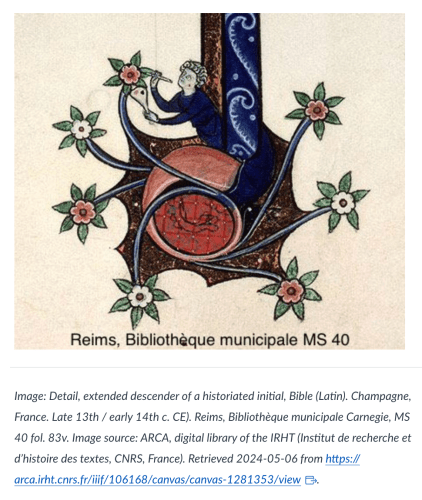
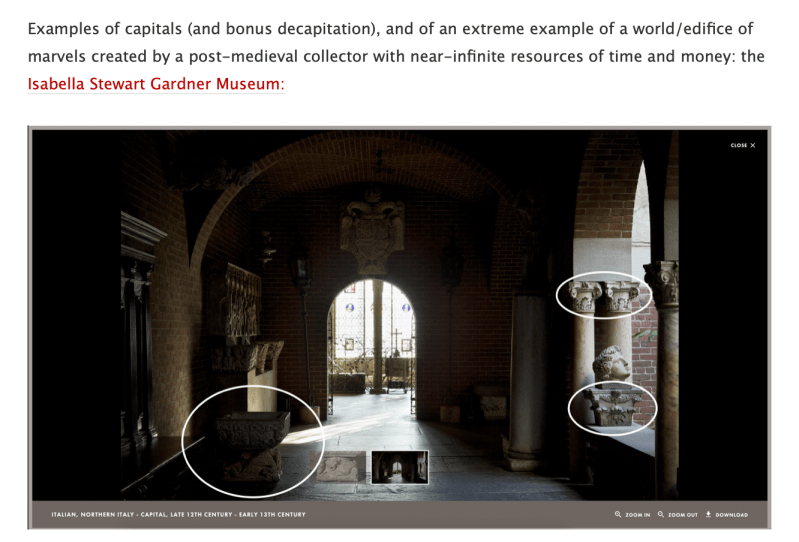
Image: in November 2024, during the previous term’s mid-term break, I went for what will probably be my last trip south of the border for the foreseeable future; to Harvard and Boston. A visit to the Isabella Stewart Gardner museum was formative in this course’s design.
OTHERWORLDLY DREAMS: OUT-TAKES from earlier stages in course design
Selections from note 1: “IDEA-BOARD,” November 2023-September 2024 (no chronological order to items, these are the less incoherent or repetitive ones)
planning process
- DRAFT topical cells and possible textual bones, tangled start of neural network
- NEXT collect more of the same
- NEXT consider and consult on current reasonable expectations for readings and student workload (50 pp/week), prerequisites=0, prior knowledge=0 assumed
- NEXT collect Englished readings, preferably free (ex. open access older translations)
- NEXT assemble skeleton, muscles, functional neural & CV & hormonal systems, flow
- LAST skin, surface distinguishing features
- WEEK 1 pneuma
storytelling and mouvance (course sketch, version 1)
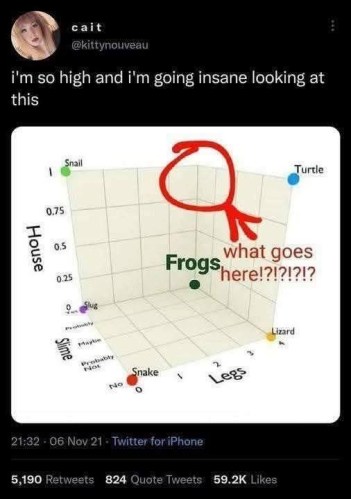
[Editing to add: This one would be SO MUCH FUN as a 100-level intro course. And it would benefit from adding the image below.]
Intro
4*3weeks: 0/1 legs – 2 legs – 4 legs – 8 legs
Conclusion
mermaids – Alexander – foxes – spiders
(ex Alex: syriac, armenian, coptic, ge’ez, persian, etc.)
Bestiaries, fables, chimeras, monsters, shapeshifters, excerpts
falconry/politico-allegorical treatises, Beatus of Liébana and other apocalypses, Ramon Llul, Brunetto Latini, Matfre Ermengaud, chansonniers
2 legs – wanted bird, one that’s Afro-Eurasia-wide? eagle, hawk/falcon? metamorphosing birds (Marie de France, Occitan)
add/ drop day quiz: mermaid debate (no. of legs, better for which half to be fish)
__________
storytelling and mouvance (course sketch, version 2)
[Editing to add: This one would be too much, too sketchy, too fast, over-ambitious even for a 400-level+ course. Would annoy the historians and the littérateurs and the theorists: triple whammy bonanza! Makes for a fun ecumenical manifesto of peace and love; perhaps for a future Statement of Teaching Philosophy, or of Educational Leadership? convert it into a serious stern solemn article in a SoTL journal? background world-building material for fiction, a medievalist fantasy novel?]
- the small, humanly-unifying, across culture space time:
- thinking fabulously
- imagining fantastically beyond the here and now
speculative fictioneering, alternative imaginations, futurisms - the joie de vivre of Stayin’ Alive
“CARPE DIEM” THEME MUSIC: Bee Gees / Saturday Night Fever (and 1977 political, social, economic background – and song use for CPR training) + Grand Corps Malade + Reda Taliani, Inch’Allah (2011, and same for context) - story-time:
time outside time, story / history, worlds within (and under and around) worlds, words temporal and spiritual and … other; … that “other” as literary studies and literary and imaginative history as telling a story of imagination, ideas, creative word-art play, and creative reading - translation:
broad sense, continuation, continuum;
sense itself, finding sense in and making sense of the world, sensitivity, “universal human values”
- margins and marginality,
not power and visible centralised political power (inc. religious authority) and its patrilinear structures, and speaking truth to power as “narratio fabulosa”- about those who move around and move around others, as individuals and as social organisation:
- merchants and traders, makers, itinerant workers and crafters and artisans, Phoenicians, Greeks, Armenians, Jews, Muslims, Protestants, monsters;
- about towns, and how a town can become a city by developing quarters (and paradoxical exclusion/inclusion) and cosmopolitanism (and inclusion/but exclusion through behavioural convention);
- about social sets and structures that bring people together across difference, wobblily but for peace and prosperity, for mutual aid and shelter: guilds, fraternal orders esp. Franciscans; recognising shared humanity in strangers
- about those who move around and move around others, as individuals and as social organisation:
- about those who are between and both the categories above:
- solitudes that aren’t solitary, melancholy that’s not misery
- the poetic attraction of shepherds and shepherdesses: Alidé Sans up a mountain again,
- being for part of the year alone in the clouds BUT not alone: with compositional inspiration, peace and quiet to practice, with divinities, seeming yourself like Pan or a dryad, AND ALSO BONUS contrary motion to otherworld-travel as journeys to the underworld and back (Frodo and Sam in Mordor and up Mount Doom is *both* of these journeys)
- and for part of the year in farms, in towns at market (a BLESSÈD BE THE CHEESEMAKERS chapter, and poesis as making)
- about life outside of central structures:
- this course will not be about kings and heroes, and patrilinear chronologies and patriarchal history;
- nor about those who oppose them but still operate within the same system of kings and heroes;
- it will be about how to move around and under and over and through these structures, and thereby survive them (individually, companionably, and culturally), and beyond mere survival: how to live
- it will be fundamentally comedic (and literary-cultural) rather than tragic (and historical-political) and anarchist in spirit
- materials for speaking truth to power and laughing at it and doing so especially by living, and with joie de vivre:
- fabliaux: women, non-aristocrats, outsiders, bref: people
- between fabliau and fable: and saints and childhood apocryphal miracle stories: another anthropmorphic shifting alterity, view the world through alien / naked eyes, question it, and practicalities of everyday life; pedomorphism? (and feral children)
- and fables: shifting anthropomorphism, satire, critique of power and political systems, early proto-socialist and -anarchist thought and SF-as-specfic-and-fantasy: we share more together than that which them upstairs try to use to divide us
- fabliaux
- 12th-14th c. FR core (additional readings: comedy inc Shakespeare up to k-drama)
- (FR 17th CE and move towards revolution while also part of continuum of non-aristocratic literature) La Bruyère, Charatères; satire, Furetière, Le Roman bourgeois;
- Molière and relations with absolutist power, delicate political rôle of court jester / holy fool
- questions of audience(s) popular and multiple, circulation written and oral and mixtures
- animal fables: geographical continuum East Asia to West Africa,
- (5th c CE end) Panchatantra and Kalila wa Dimna,
- (med FR 12th-16th CE) Marie de France Fables & Lais as intermediate fable/fabliau/SF metamorphosis, Roman de Renart, Rabelais, Perrault et al “fairy tales / contes de ma mère …” literary-intellectual underground, subversive satire
- disguise, pseudonymity, anonymity, veiling; erasure invisibility vs protection, resistance network
- (FR 17th CE) La Fontaine, Fables
- THE BIG: how stories congregate, are collected, circulate, continue, and live (in a larger extended form): BOOKS as human cultural mouvance
- (and libraries: tangent of the history of libraries, up to Project Gutenberg and UNESCO)
- PROJECT: MAKE A COLLECTIVE VIRTUAL BOOK (LIBRARY?) TOGETHER
- central books, and central to idea of book and book as unified idea: *both* sacred works *and* associated collections, organised by liturgical year: books of hours as popular book form, and books combining that and favourite prayers and songs, saints’ lives and apocryphal saintly-childhood and oft-comedic-or-cartoonish miracle stories and other stories ex. fabliaux and fabliesque
- 13th-15th CE BIG BOOK mss: collections, compilatio, conservation, codicology
- bestiaries, chansonniers, Matfre Ermengaud, Brunetto Latini, universal histories
- THEMATIC HINGE: Breviari d’Amor and Li Livres du tresor – a world of marvels, a geography and history, and the book itself as a marvel and wonder for being what brings them together. This will be where we see how the small and its associations form parts and also the binding; how a book is nought without its margins, marginalia, thread, invisible and ghostly marking of its physical making, traces of human labour blood sweat tears
- BRIDGE to what makes a book a book? Marie de France ms and Arnaut de Mareuil (and other trobador) reorganisation post facto: how to organise and order material – thematic, poetic, and adding narrative; Uc de Saint Circ, chansonniers with vida e razo; Dante, Vita nuova
- books as whole objects, and books that collect related stories or are (or become) one whole work: Renart and episodic open-ended narrative, Chrétien de Troyes and romance, end with “bumper book” and pan-Afro-Eurasian Alexander
- Postmedieval: Balzac, Calvino invisible cities, Tolkien, Le Guin’s Hainish cycle’s Ekumen, Pratchett, Stephenson’s Anathem, Haraway’s Staying with the trouble
January 2025, week 2 of class but thinking ahead to the end …
premodern-postmodern merveilleux/speculative-fiction (but not SF)
medievalism and pre-modernity as being in the middle
vs
modernity as being on the cusp of the future (and The American Dream)
and
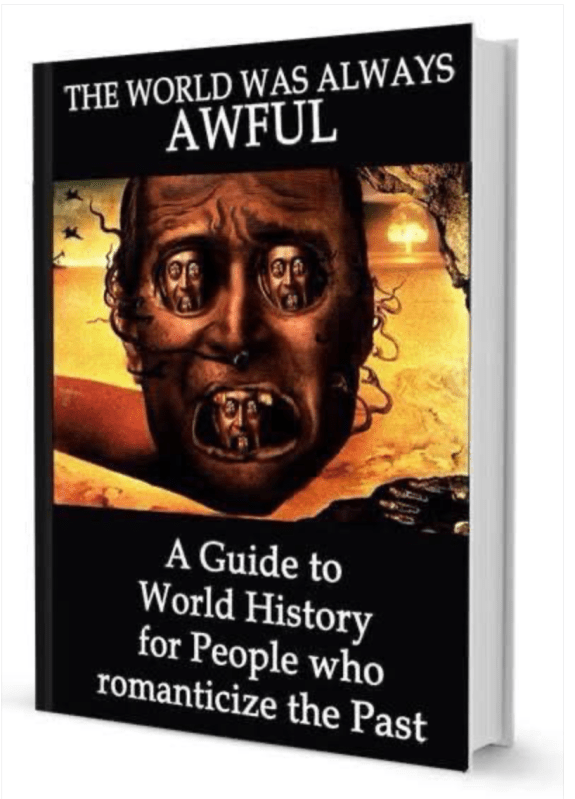
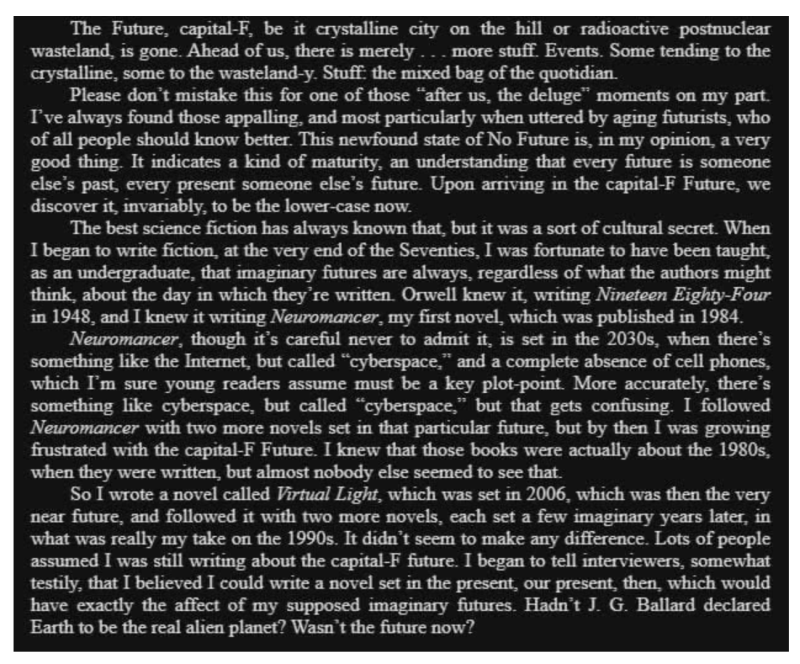
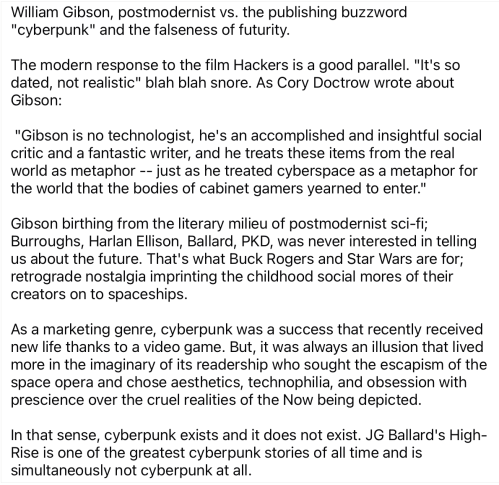
postmodernism as being in a futureless present
and
dreamworlds, living a dream, living multiply, living multiversically (and a Marvel™️ marvellousness)
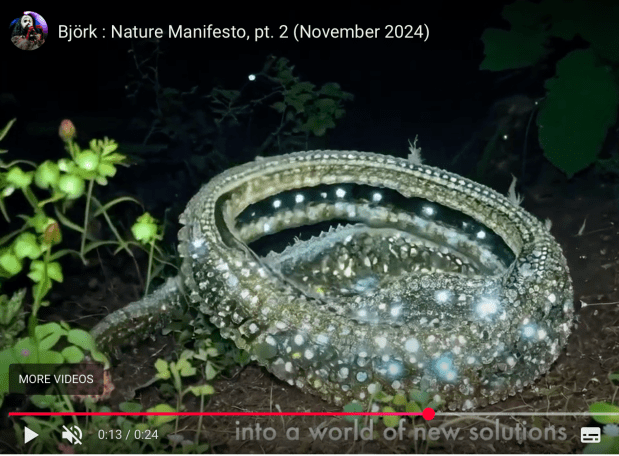
Björk, monsters, glitter; forum “Biodiversité : quelle culture pour quel futur ?”
(link: https://www.youtube.com/watch?v=C6sPj4j96Bg)
The note that I am not going to publish
December: the end of the previous term, exams, marking.
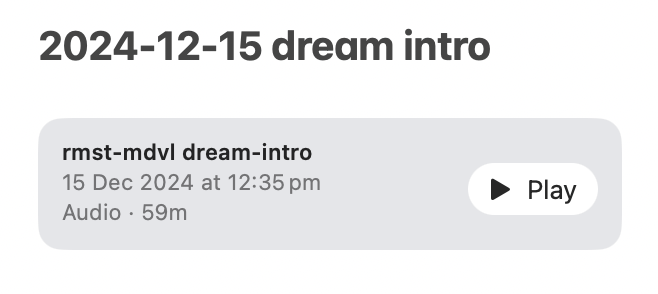
Friday 13 December: exam (another, unrelated, course). That night and the next one, I sleep a lot; the traditional cyclical December crashing, body-enforced rest, and recovery. I wake up around noon on Saturday 15 having had a vivid dream about teaching the first class. It’s very clear and detailed. I know that I can’t write it all down fast enough, so I record it. At nearly an hour long, it’s the perfect length for an 80-minute class. I’m tempted to play this to my students in our first session.
Then I wake up, properly fully mind and all, and remember how I teach, and why.
 Juliet O’Brien